Dream Guide
Falling Dream Meaning: Control, Drop, and Groundlessness
- Written by
- Viberole Editorial Team
- Published
- 2026-05-31
- Reading
- 7 min read
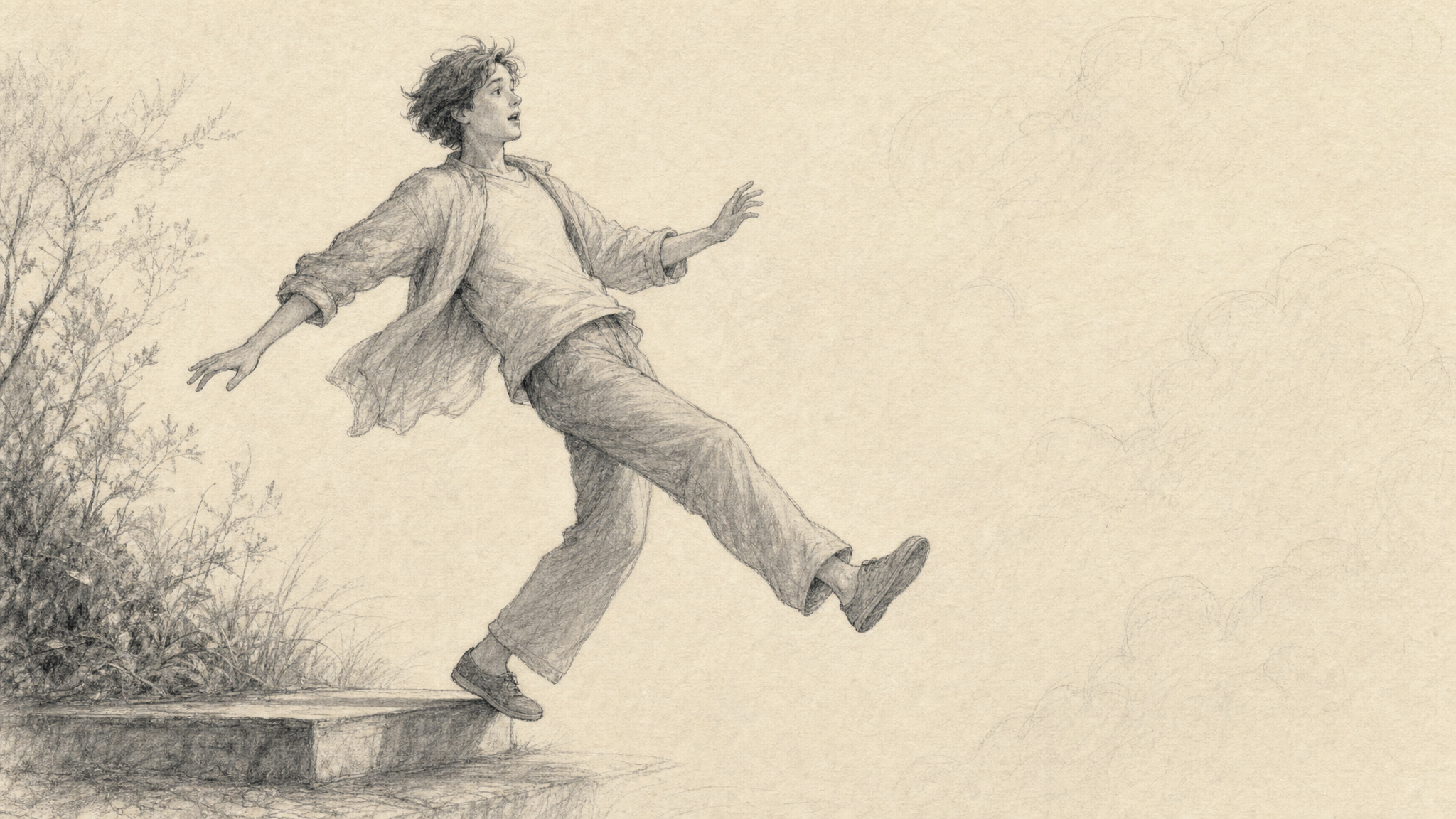
Falling dreams are short, physical, and memorable. You drop from a ledge, chair, cliff, or bed and often wake before impact. The question is not only what falling means in a book, but what groundlessness felt like in your body.
Not a diagnosis
Dream readings here are reflective signals, not medical or psychological diagnoses. One symbol does not prove what you want, fear, or must do next. Use the angles below as starting points, then run the dream signal test for your own scene.
What people usually describe
Sudden drop, slow-motion fall, slipping on stairs, elevator plunge, or tipping backward from a chair. Some dreams include impact. Others end in mid-air panic. The jolt into waking is part of the experience.
Scenario A: fall from height at work or school
You lose footing on stairs, a balcony, or a platform while others watch or hurry past. Waking feeling is embarrassment plus fear. This often maps to status anxiety, performance pressure, or fear of public failure.
Scenario B: fall in private space
You fall from bed, a chair, or a low step alone. No audience appears. The feeling is disorientation more than shame. Here the dream may connect to exhaustion, transition, or a sense that daily structure is less stable than it looks.
Three reading angles
Emotional tone
Panic, shame, relief, or numbness each change the reading. A fall without fear suggests a different signal than a fall with social exposure.
Continuity with waking life
Link to burnout, uncertainty, financial worry, relationship shift, or sleep disruption. Falling dreams are common during high-change periods.
Reflective inquiry
Ask what question the jolt left behind: What support feels missing? What decision feels rushed? What role feels unsteady?
Five practical takeaways
- Notice public vs private setting: audience changes the social reading.
- Track sleep and stress: hypnic jerks and stress overlap with falling imagery.
- Avoid catastrophe thinking: falling rarely predicts literal events.
- Look for paired dreams: chase or teeth dreams nearby may share a theme.
- Build a signal from your scene: use the structured test while details are fresh.
Your dream, your signal
Turn this reading into a Passport signal
Describe your scene, name the feeling that stayed, and hold the question that lingered. The free test returns six reusable dimensions.
Related readings
Pair with flying dreams, teeth falling out, or the hub at Common dream readings. Next steps: Reflect and Passport.