Dream Guide
House or Room Dreams: Self-Structure, Boundaries, and Change
- Written by
- Viberole Editorial Team
- Published
- 2026-06-01
- Reading
- 9 min read
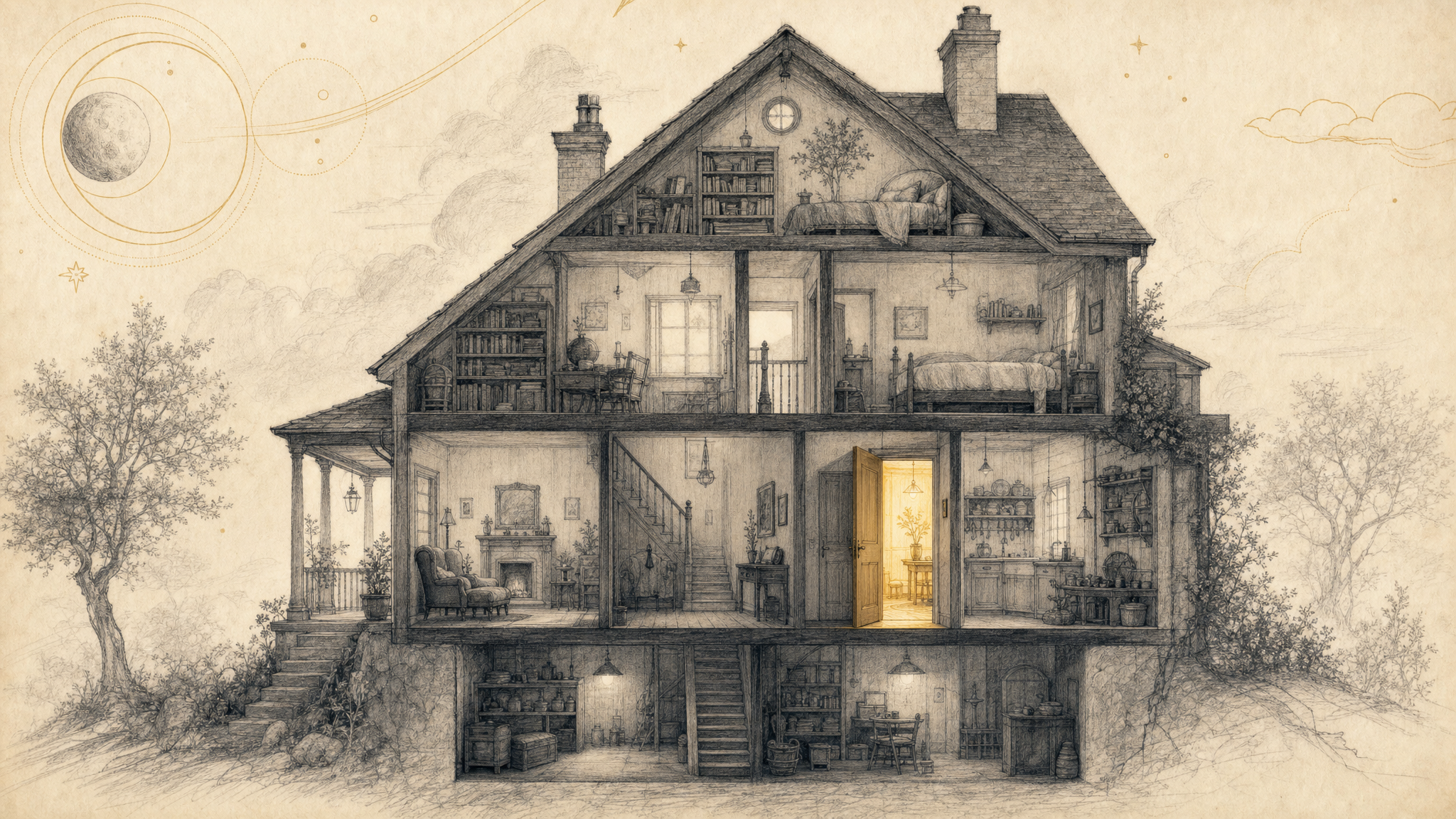
House dreams are less about real estate than about inner architecture. Psychologists use rooms and floors as maps for identity, privacy, and what you are ready to face during a transition.
Not a diagnosis
Dream readings here are reflective signals, not medical or psychological diagnoses. One symbol does not prove what you want, fear, or must do next. Use the angles below as starting points, then run the dream signal test for your own scene.
Quick answer
Exploring a house often means you are restructuring identity during change. Finding a new room can signal growth or hidden material you are ready to integrate. A messy house often reflects cognitive overload or blurred boundaries with other people. Cleaning in the dream is usually a positive sign of agency returning.
What people usually describe
Childhood homes with altered layouts, endless hallways, attics, locked doors, strangers in private rooms, or houses that grow larger as you walk. Some dreamers discover bright new wings. Others wade through clutter they cannot sort.
Scenario A: discovering an unknown room
You open a door you never noticed. The room may feel inviting, dusty, or unsettling. A welcoming room often tracks expanding self-awareness: skills, desires, or feelings you are finally willing to name. A dark room may point to neglected care, old grief, or traits you usually keep offstage.
Scenario B: messy house with blurred boundaries
Objects pile up, layouts make no sense, or people walk through spaces that should be private. Waking feeling is overwhelm or exposure. This often aligns with overcommitment, people-pleasing, or stress spilling into mental space that should stay restorative.
Three reading angles
Transition and exploration
Moving, ending a relationship, or changing roles can trigger house exploration dreams. The psyche is walking the floor plan of a life that no longer fits the old map.
Boundaries as rooms
Think porch, living room, bedroom. Who has access in waking life? A messy house with intruders can mirror weak boundaries or fear of being seen before you feel ready.
Cleaning as active coping
When the dream shifts from chaos to sorting, dusting, or repairing, it often marks a move from passive overload to reclaiming privacy and order. Small waking actions can echo that shift.
Five practical takeaways
- Map the house to roles: which room matches work, intimacy, family, or solitude?
- Track who enters: intruders in the dream may mirror real boundary leaks.
- Name the transition: what chapter is ending or starting this month?
- Reduce one clutter source: inbox, schedule, or unresolved conversation.
- Test your layout: your floor plan is personal; generic symbols will miss it.
Your dream, your signal
Turn this reading into a Passport signal
Describe your scene, name the feeling that stayed, and hold the question that lingered. The free test returns six reusable dimensions.
Related readings
During high change, also read recurring dreams and dreaming about an ex. Return to the dream hub, then Reflect or Passport.